The shed is a humble structure, a basic four walls and roof. It has all of the elements, yet it’s not quite a building - something so simple and generic that you could simply buy it in a catalogue. It also holds a nostalgic place in the imagination as something like a haven - a refuge not only for wheelbarrows and next year’s tubers but also for people and their activities. A shed can be much more than a simple store room.
Temple For Fruit And Veg connects mundane activities with the divine. It is a place to celebrate the joy of cultivation, human-earthly collaboration and fruits of labour. In this setting, task becomes ceremony, ushering in good fortune, weather and harvest.
From the temple, one can observe the changing seasons and gather together to partake in rituals new and old - from the podding of the peas and the cleaning of the tools, to making offerings to Gaia and celebrating Samhain.
Client
Date
2020
Location
Coniston, Cumbria
Temple of Fruit and Veg
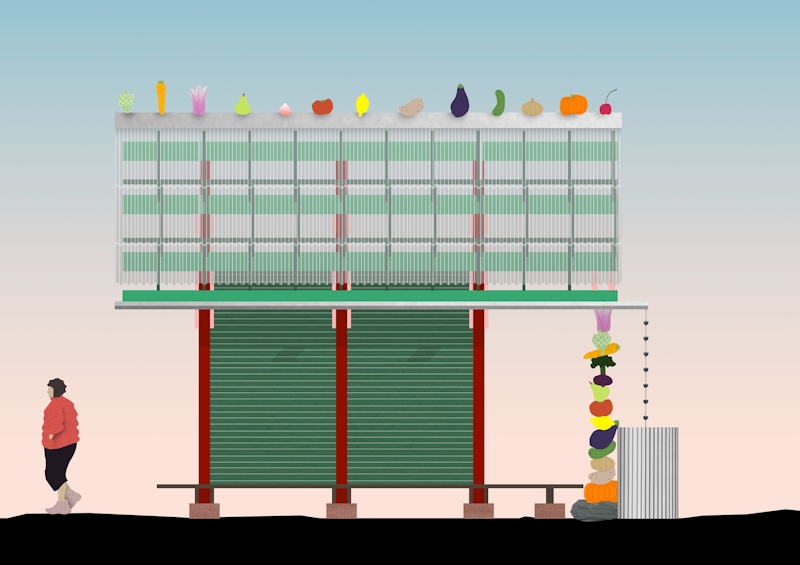
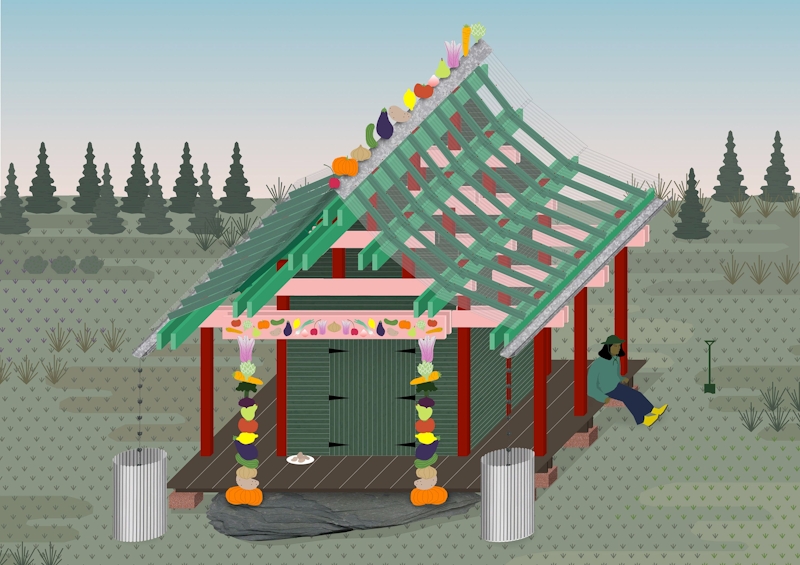
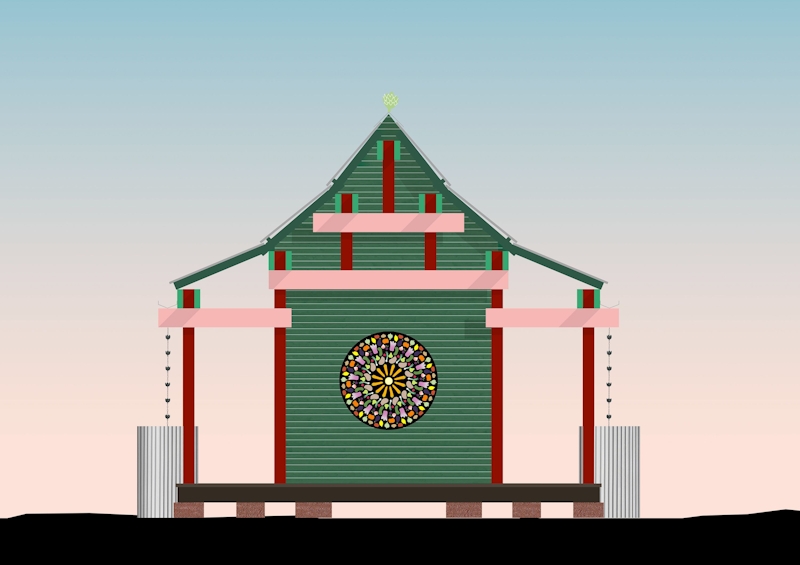
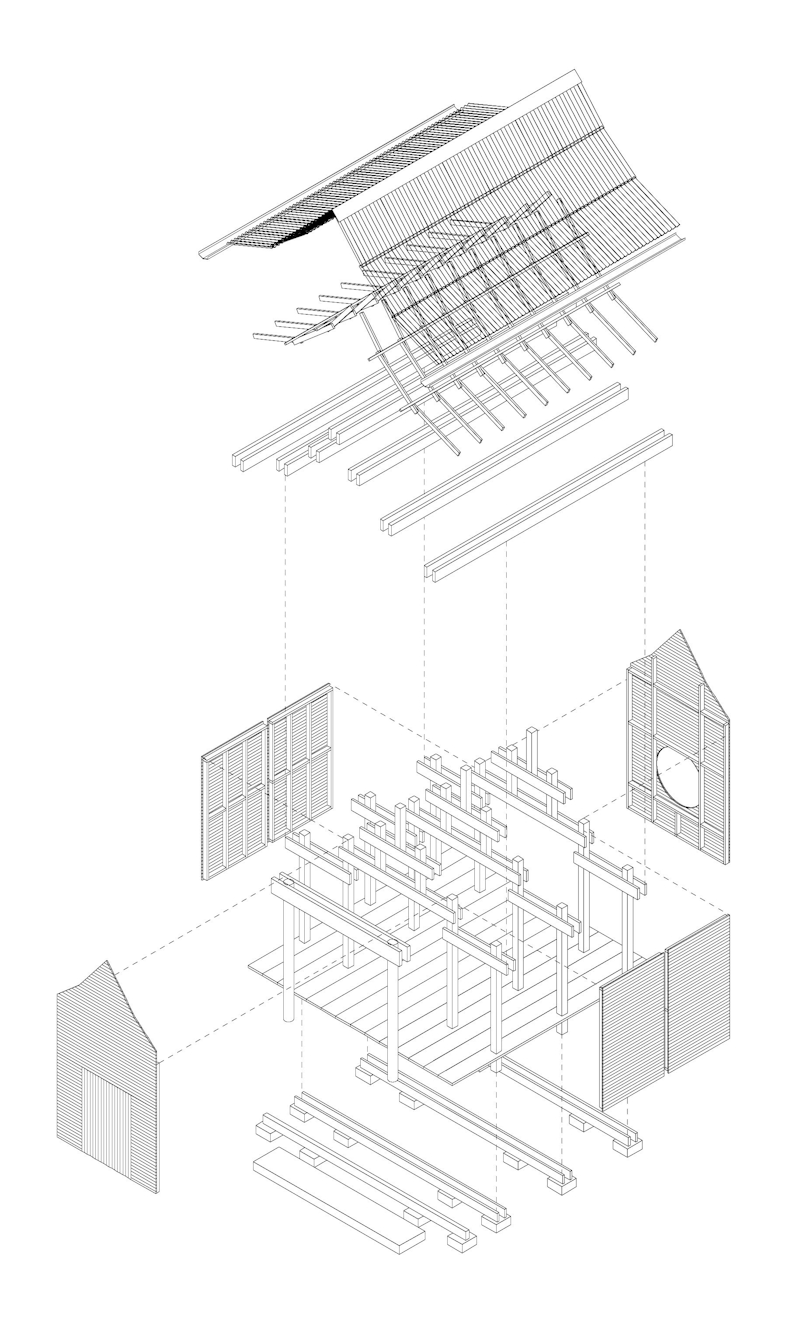
The temple is constructed from three timber frames, which can be made flat and raised into place. The frames are made incredibly simply, with beams that sandwich either side of a post. This is a method taken from the Segal school of thought on construction, which requires builders only to screw two pieces of wood together in a basic manner to make a structure. The posts sit on saddle stones; and a timber floor spans the beams at base level. The tops of the frames are joined by a series of beams that form the basis of the roof. The cladding is supported by a secondary frame, fixed back into the primary frames. Battens and sheet cladding form the roof.
1/5